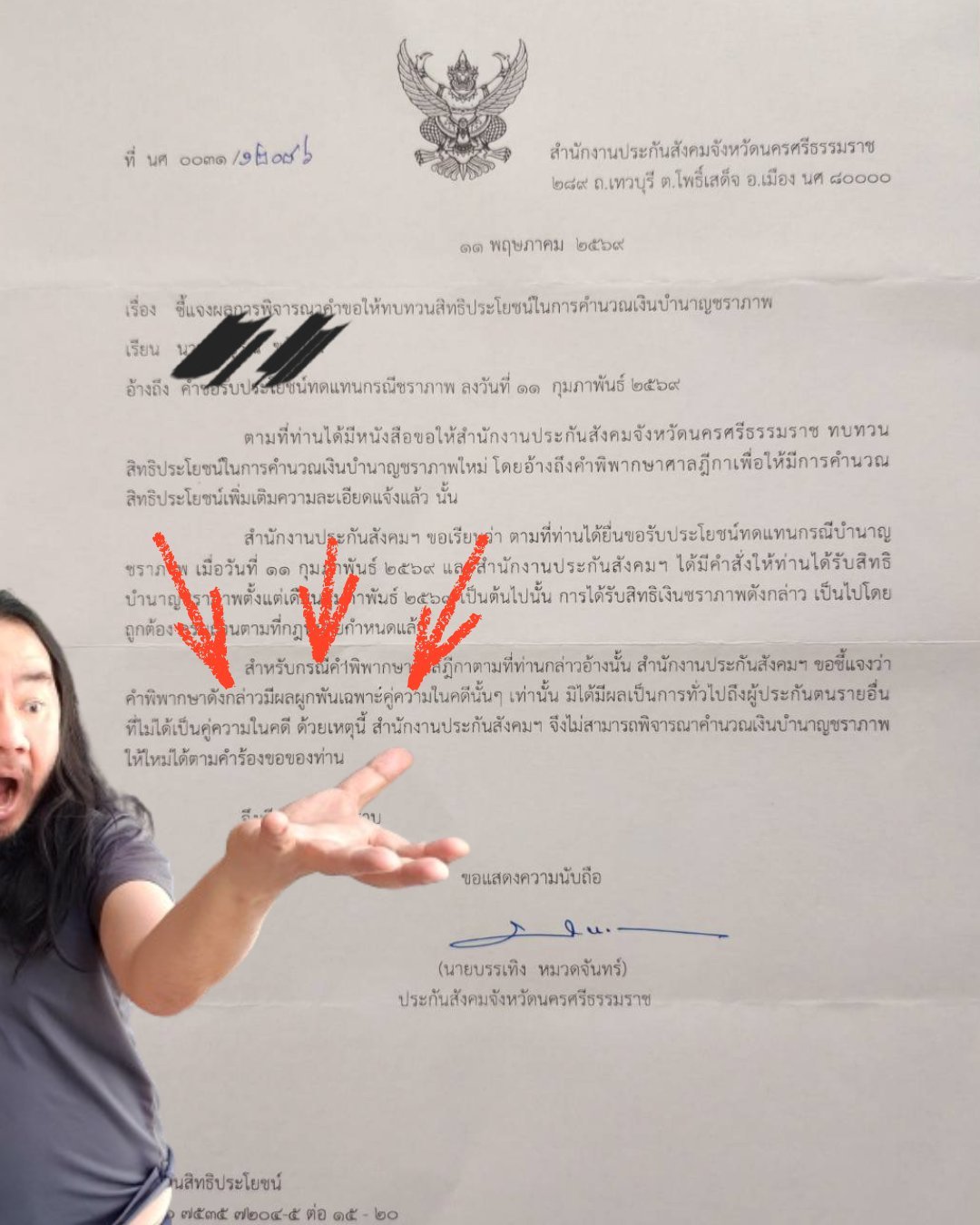
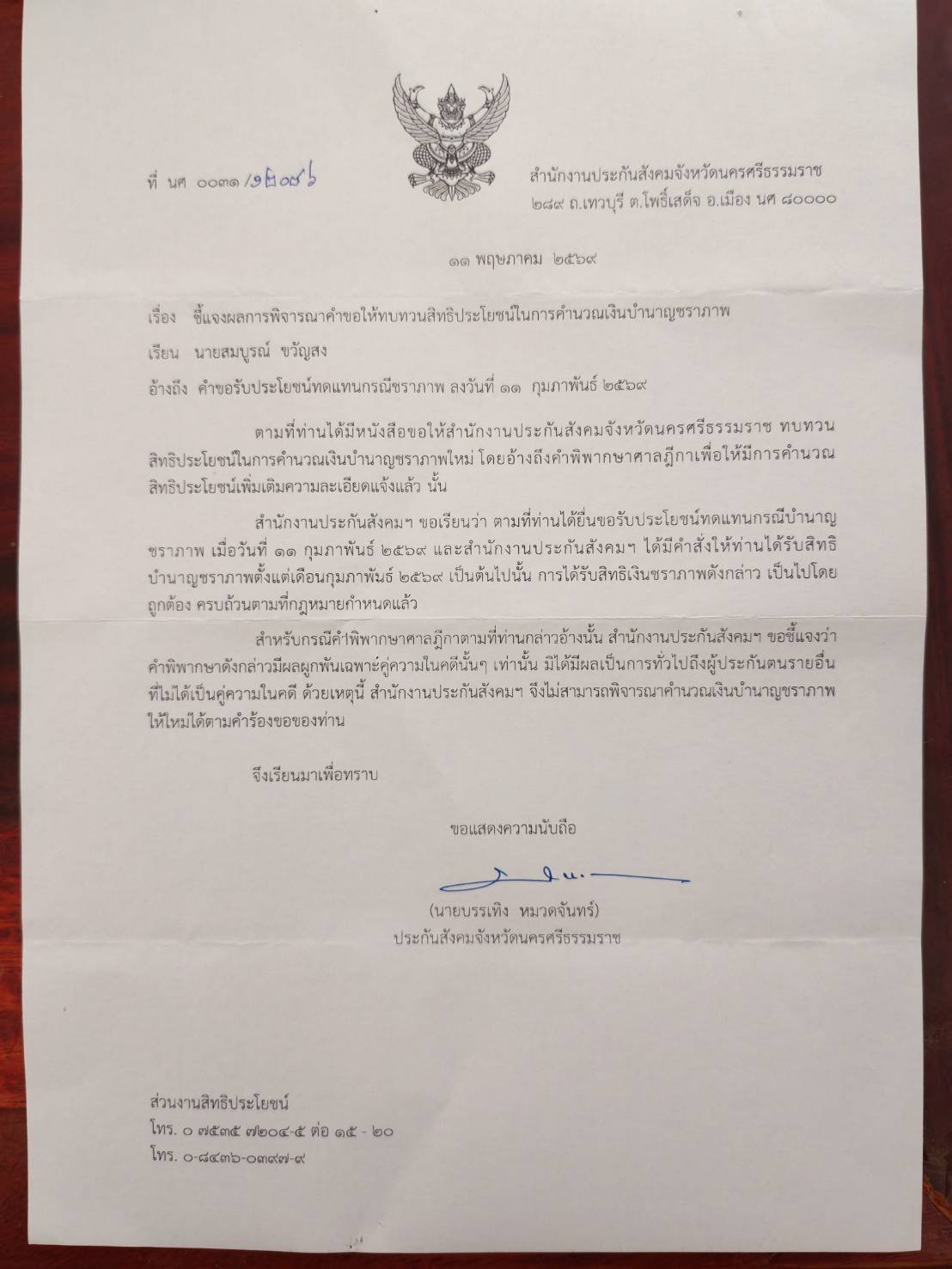
This sentence was written in an official response to Somboon Kwansong, a Section 39 contributor who requested a pension recalculation citing Supreme Court Ruling No. 3307/2567 (2024).
On the surface, it reads like a standard bureaucratic denial. Under legal analysis, it is something far more significant: the Social Security Office handing the class action movement its most powerful weapon to date — in their own handwriting.
Three Reasons This Document Is a Legal Weapon
✓ A formal review was requested
✓ The correct procedural path was followed
✓ The SSO formally refused — in writing
In other words: the SSO opened the door to the Administrative Court themselves.
"Even if the Supreme Court has ruled in your favor — if you were not the specific plaintiff in that case, we will not pay you."
This is precisely why class action law exists. Without it, the SSO can implement a policy of "pay only those who specifically sue us" while hundreds of thousands of workers continue to receive poverty-level pensions under the CARE formula — indefinitely.
This is not a case of institutional ignorance. The SSO knew, and chose to wait to be forced. That distinction matters in an Administrative Court proceeding.
The document they thought was a rejection letter may turn out to be a historical exhibit proving the system knew about the problem — and chose not to fix it.
— Boon Arayapon, D.V.M., LL.B. — Founder, "Khor Keun Mai Dai Khor Taan"Under Thailand's Administrative Procedure Act, this letter constitutes an "administrative order" (คำสั่งทางปกครอง). Recipients have 90 days from the date of receipt to file an appeal and/or bring proceedings in the Administrative Court. This deadline is not waivable. If you have received a similar letter, contact the team immediately via LINE.
Do not discard it. An SSO rejection letter citing Ruling 3307/2567 is a key evidentiary document for the class action. Photograph it immediately and share it with your assigned parent volunteer via LINE — or bring it directly to your provincial Lawyers Council office together with your other documents.
See full case steps →